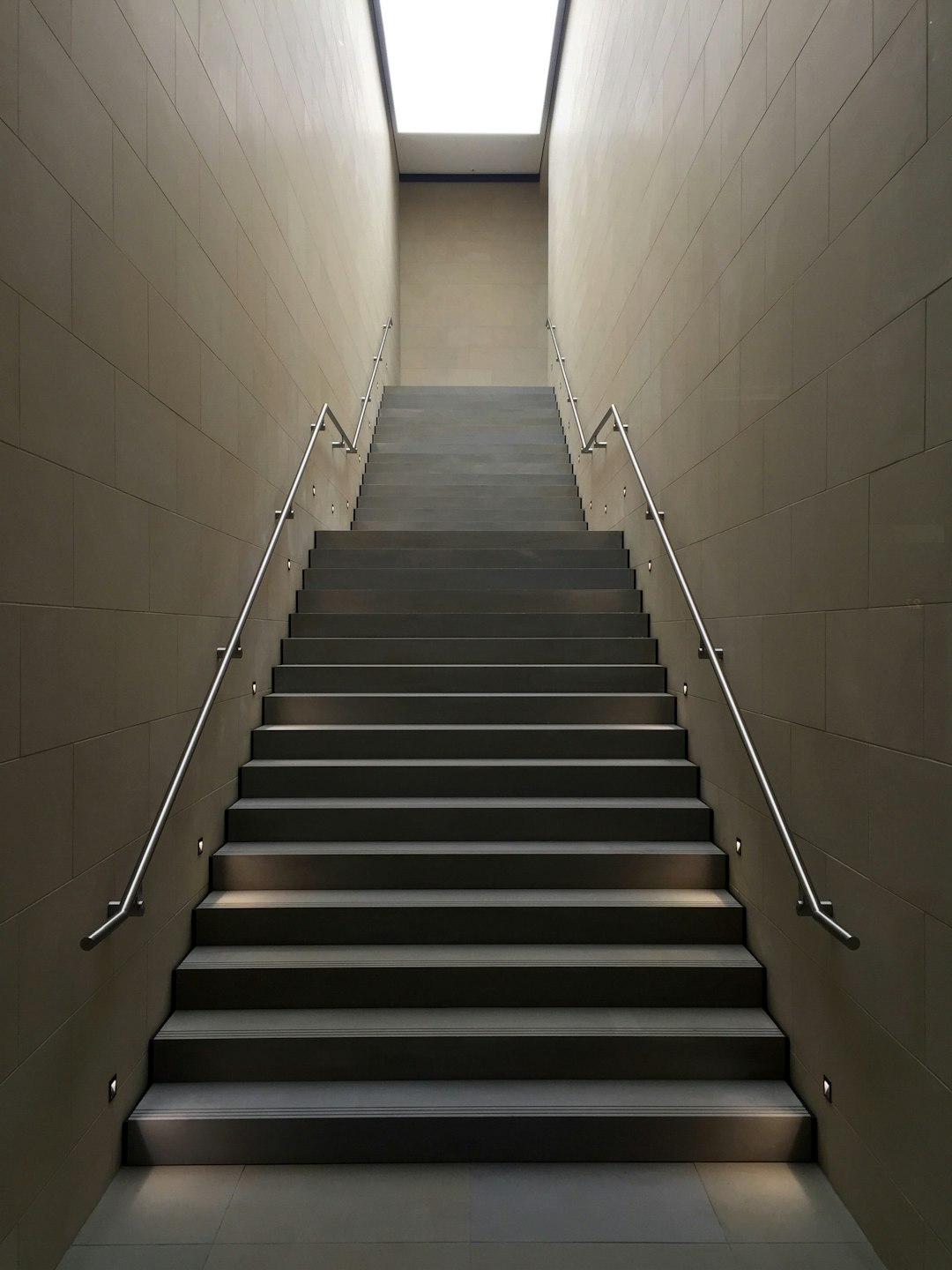
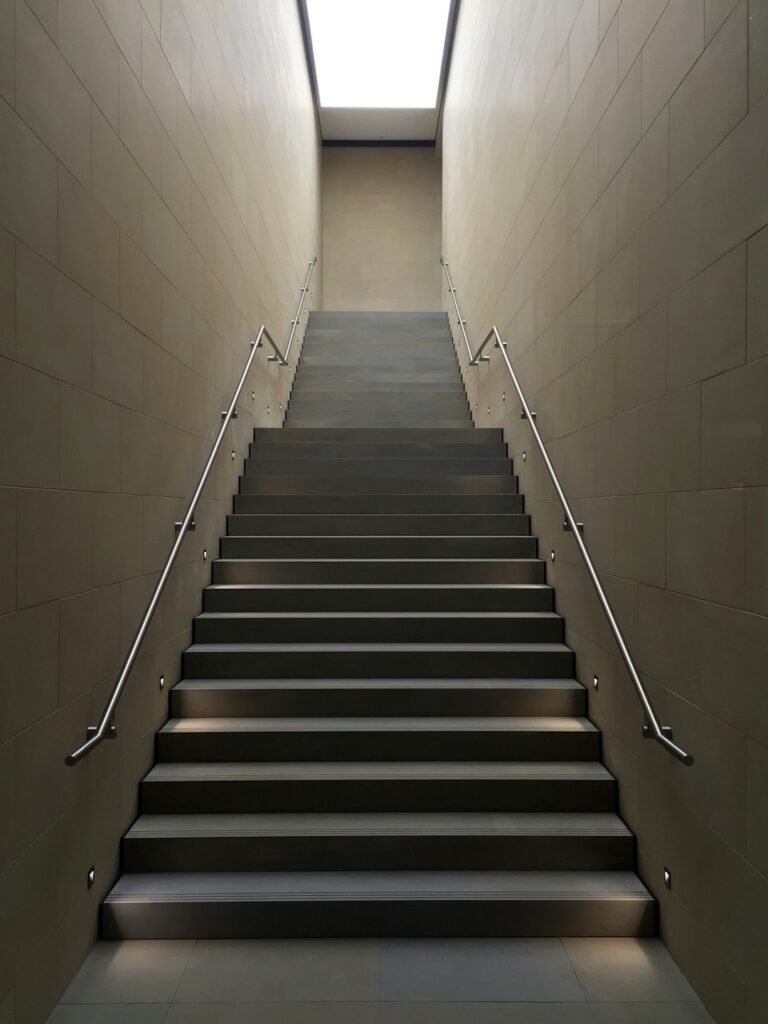

LED strip lights are a popular choice for stairs. Mounted discreetly along the edges, they cast even light where it’s most needed, on the treads and risers. These strips come with adjustable colour temperatures, which means you can match warm or cool tones to the rest of your interior. It’s easy to overlook how much lighting temperature affects mood, but picking the right hue ties the stairwell into your overall aesthetic.
Picture an office building where the stairwell is part of the client experience. Pendant lights installed at landings can create visual interest and draw attention upward. Their shadows add texture, turning an ordinary staircase into a stage. The key is to balance brightness with warmth so visitors feel comfortable, not overwhelmed. Fixtures should be chosen for style as well as function, and careful placement avoids glare that can distract or cause discomfort.
Energy efficiency is often neglected in stairwell lighting plans. Installing motion sensors is a practical way to cut waste. Lights activate only when someone is present, which is particularly useful in rarely used stairwells or after hours. These sensors can be integrated subtly, without bulky equipment or obvious wiring, keeping the look clean and intentional.
Dimmable lights add another layer of control. They let you adjust brightness depending on time or activity. For example, lowering light levels at night reduces harshness while maintaining enough visibility to prevent accidents. It also helps create a calm atmosphere that can reduce stress for people using the stairs during late hours. Many modern LED systems offer smooth dimming without flicker, which is important for comfort and eye strain.
Wall sconces and illuminated handrails provide functional lighting while enhancing design cohesion. They add safety by lighting up darker corners and guiding users along the staircase. Sconces can be spaced evenly to avoid shadows, and handrails with built-in LEDs can illuminate without taking extra space. These features often require coordination with electricians early in the project to ensure wiring is hidden and installation meets safety codes.
It’s common to underestimate the importance of detailed planning before installation. Checking wiring routes, confirming local building regulations, and testing light placement in a mock setup prevents costly fixes later. A frequent misstep is choosing fixtures without considering how shadows will fall on stairs, which can create blind spots rather than eliminate them. Taking time during this phase saves headaches.
For those exploring options, see the range of custom stairwell lighting available online. Each piece offers a chance to tailor light to fit your specific environment and needs. Whether you want subtle illumination or a striking feature, bespoke lighting can make your stairwell both safer and more stylish.
Additional ideas and inspiration are available for stairwell lighting designs. Browsing these examples can help you visualise what suits your space best and avoid common pitfalls like overly bright bulbs or incompatible styles. Good lighting design is about layering function with form, and these options show how to get it right.